The problem
Damp and moisture disputes require clear causation: rising damp, penetrating damp, condensation or construction defect. Misdiagnosis leads to failed remediation, continued dispute and escalating costs.
Many damp reports are produced by companies that also sell damp-proofing treatments. This creates a fundamental conflict of interest. Rising damp is frequently misdiagnosed where the true cause is condensation, penetrating damp or plumbing failure. Without instrument-verified evidence, liability remains unclear and remediation is often unnecessary, expensive and ineffective. Independent damp survey Southampton, Winchester and London demands a forensic approach — not a sales pitch.
The risk
Without instrument-led analysis, liability remains unclear. Insurers, landlords, developers and solicitors need defensible evidence of cause, extent and remedial scope.
Failed damp remediation typically costs £5,000–£25,000 to undo. In landlord-tenant disputes, misattributed blame can result in costly litigation. Insurance claims are routinely rejected when damp reports lack data integrity. A forensic damp investigation from IBSF provides the clarity needed to resolve disputes efficiently.
Our investigation
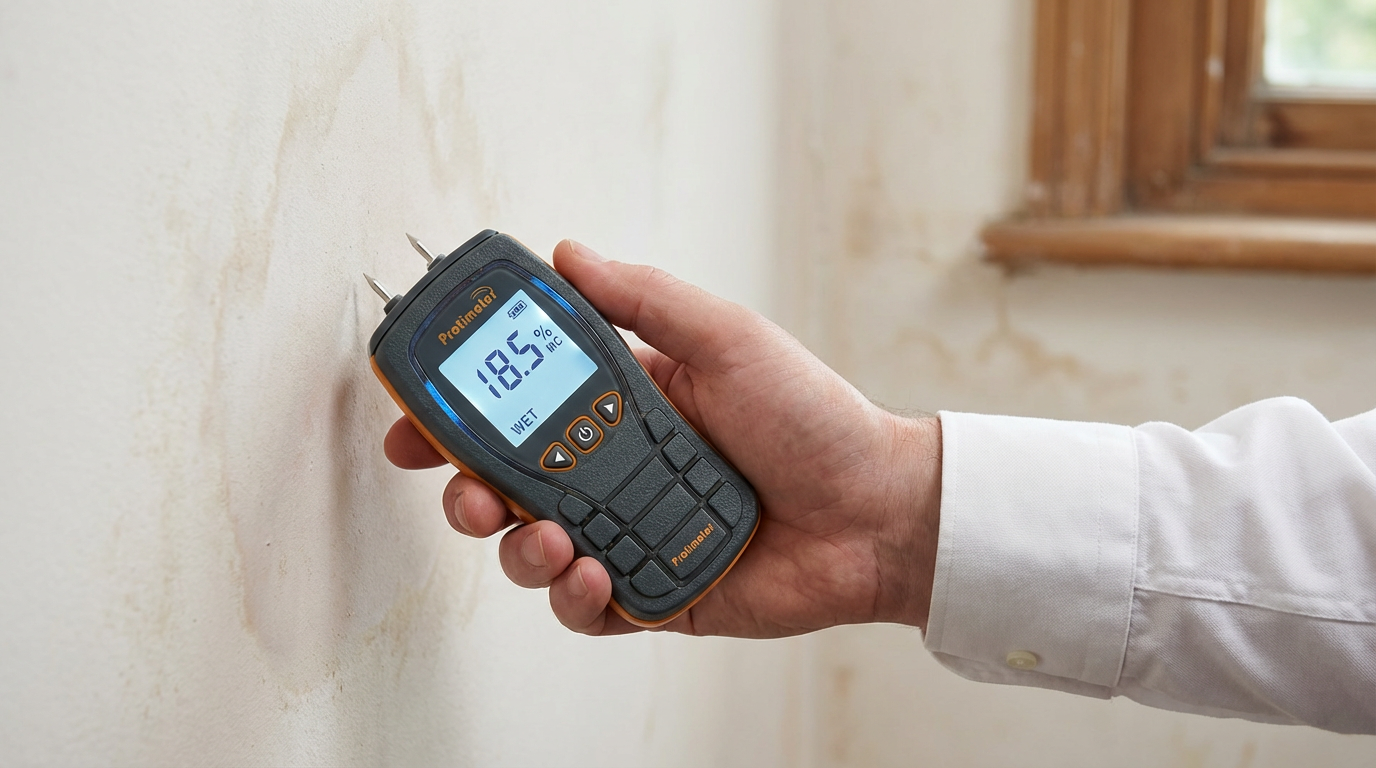
We use calibrated Protimeter moisture mapping, FLIR thermal imaging, hygrothermal data logging and environmental monitoring to distinguish moisture sources and migration pathways. No remedial bias. No contractor recommendation.
- Initial site assessment and case history review
- Protimeter moisture mapping — surface and sub-surface readings across all affected areas
- FLIR thermal imaging to identify cold bridges, hidden moisture and insulation defects
- Hygrothermal data logging (temperature, humidity, dew point) over 7–28 days where required
- Ventilation assessment — CO₂ and air exchange rate measurement
- Psychrometric analysis and dew point modelling
- Photographic and thermal evidence documentation
- Data analysis and causation isolation
Findings
Causation is isolated using recorded, repeatable data. Moisture maps, dew point analysis and ventilation performance quantify the problem and support clear, defensible conclusions. Reports distinguish between rising damp, penetrating damp, condensation and plumbing leaks.
What the report delivers
- ✓ Causation analysis with clear conclusion
- ✓ Moisture maps with colour-coded data
- ✓ Thermal images with annotation
- ✓ Environmental data logs and graphs
- ✓ Dew point and condensation risk assessment
- ✓ Remedial guidance (no contractor recommendation)
- ✓ Suitable for dispute resolution, insurance and litigation
Who commissions this investigation?
Homeowners
Concerned about damp, mould or moisture and want an independent diagnosis before committing to costly remediation.
Landlords
Facing tenant damp complaints or disrepair claims and needing defensible evidence of cause.
Tenants
Living with damp or mould and needing independent evidence for a complaint, deposit dispute or legal action.
Solicitors
Requiring expert damp reports for landlord-tenant disputes, negligence or insurance litigation.
Insurers
Needing independent causation analysis for damp or water damage claims.
Property developers
Facing defect liability claims related to moisture, damp-proofing failure or condensation.
Frequently asked questions
- What is the difference between rising damp and penetrating damp?
- Rising damp is ground moisture drawn upward through masonry by capillary action, typically limited to 1–1.5m above floor level. Penetrating damp enters through the building envelope — walls, roof, windows or defective details — driven by rain or hydrostatic pressure. The treatment for each is fundamentally different, which is why accurate diagnosis matters.
- How do you diagnose condensation versus rising damp?
- We use hygrothermal data logging, moisture mapping and psychrometric analysis. Condensation occurs when warm, moisture-laden air meets cold surfaces below dew point. We measure surface temperatures, relative humidity and ventilation rates to determine whether the moisture source is environmental or structural.
- Do you recommend damp-proofing companies?
- No. IBSF is a non-remedial consultancy. We diagnose and report. We never recommend specific contractors or treatments because this would compromise our independence — the very thing that gives our reports credibility in disputes and court.
- How long does a forensic damp investigation take?
- A site visit typically takes 2–4 hours depending on property size. Where data logging is required (e.g. to monitor environmental conditions over time), loggers are deployed for 7–28 days. Reports are delivered within 5–10 working days of final data collection.
Where we work
Damp survey Southampton. Damp survey Winchester. Damp survey London. Independent damp survey near me. Forensic damp investigation Hampshire. Moisture mapping London. Rising damp expert Southampton. Penetrating damp investigation Winchester.
Related investigations
Commission this investigation
Request an initial case review. We respond to serious enquiries promptly.
NAP: Independent Building Science and Forensics, 15 Rockstone Pl, Southampton SO15 2EP. Tel: +44 7555 809800. Email: enquiries@independentbuildingforensics.co.uk.